
 EN
EN
 ar
ar bg
bg hr
hr cs
cs da
da nl
nl fi
fi fr
fr de
de el
el hi
hi it
it ko
ko no
no pl
pl pt
pt ro
ro ru
ru es
es sv
sv tl
tl iw
iw id
id lv
lv lt
lt sr
sr sk
sk sl
sl uk
uk vi
vi et
et hu
hu th
th tr
tr fa
fa ms
ms hy
hy ka
ka ur
ur bn
bn mn
mn ta
ta kk
kk uz
uz ku
ku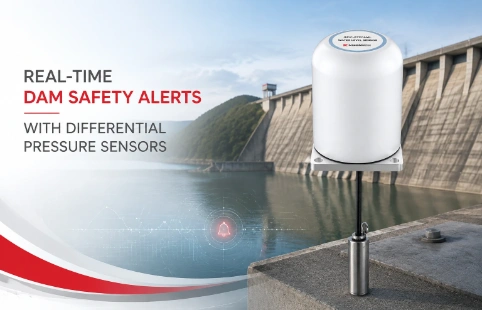
Real-Time Dam Safety Alerts with Differential Pressure Water Level Sensors
Key Takeaways An alert chain needs more than a sensor: define field in...

Smart Vibrating Wire Strain Gauge (Surface Welded Model)
Steel bridges, crane runways, and support beams in mines—these structures flex under load in ways that are invisible day to day but add up over decades. Catching that slow drift early is what keeps a structure safe. The surface-welded vibrating wire strain gauge solves a specific problem: how to get accurate, long-term strain data on an existing steel surface without drilling or heavy bolting. It welds directly to the substrate, forming a near-permanent bond that tracks tension and compression with a resolution most electrical foil gauges can’t match over multi-year campaigns. Kingmach supplies these gauges as part of a broader geotechnical line, built for field crews who need something that holds up to rain, vibration, and time.
Technical Detail
Inside each Kingmach smart vibrating wire strain gauge, a tensioned steel wire vibrates at a frequency set by the strain in the mounting block. Arc-weld the end blocks to the steel surface, and the gauge reads strain directly from the host member. The welded joint transfers load without the creep you’d see in adhesive-mounted sensors, so zero-drift is minimal even after thermal cycles and overloads. Resolution typically sits around 1 microstrain, with a working range that covers ±3000 microstrain—enough for most structural steelwork. An integral thermistor handles temperature compensation, useful when measuring strain on sun-baked girders. The sensor comes with a high-strength signal cable, and since it’s vibrating wire, you can hook it up to almost any datalogger that reads frequency; no special excitation is required. Kingmach keeps a wide inventory, so stock sensors ship fast. If a project calls for a non-standard gauge length, smaller mounting blocks, or tailored cable lengths, the factory adjusts the build. That kind of flexibility tends to cut site downtime. The company’s technical support walks you through installation and commissioning, and the after-sales team stays engaged long after the first reading. For monitoring steel arch ties, hangers, or long-span trusses, a surface-welded gauge eliminates the logistics of embedded sensors and keeps the structural integrity intact.
News
Key Takeaways An alert chain needs more than a sensor: define field in...
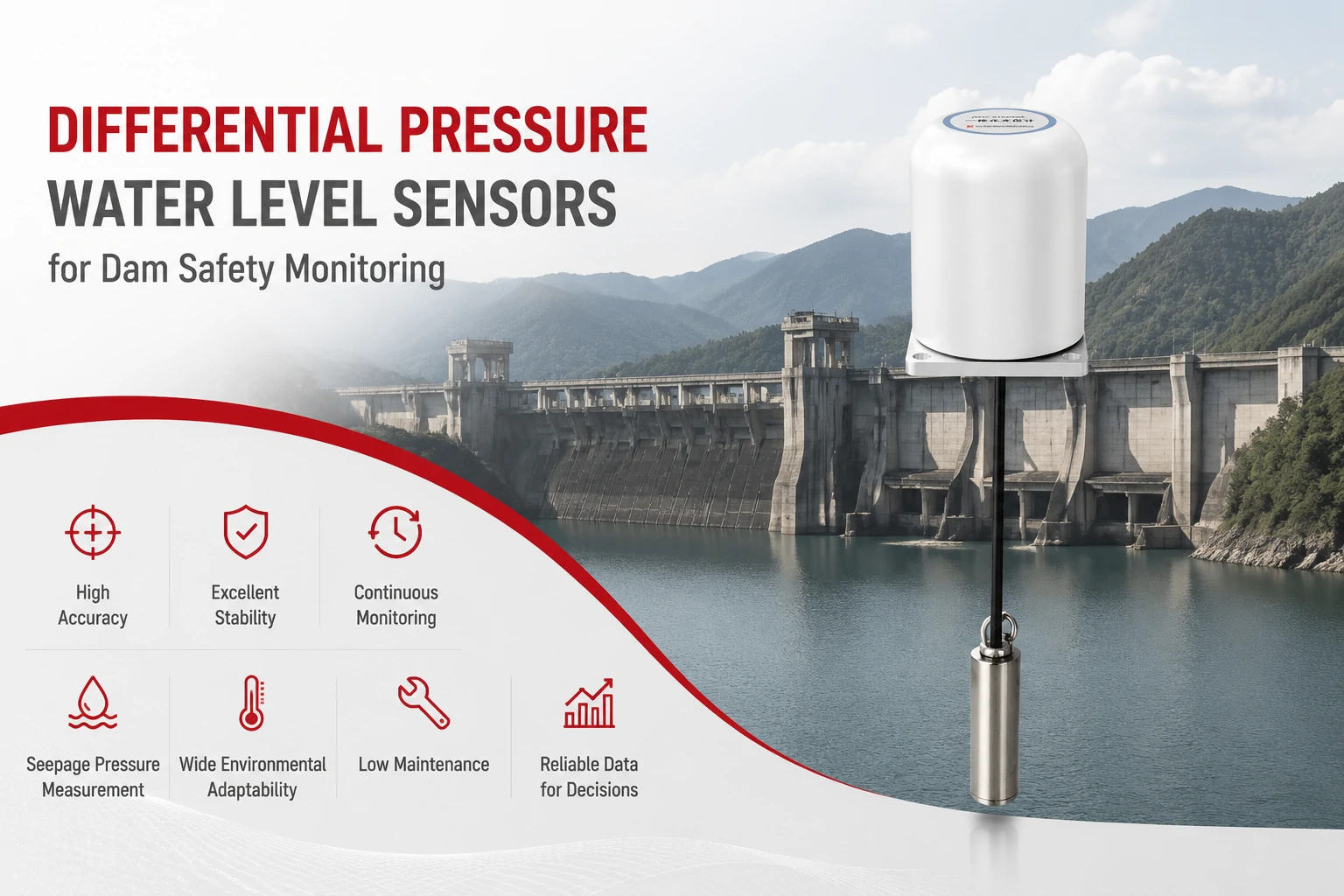
Key Takeaways The strongest fit is usually a confined, submerged, or s...
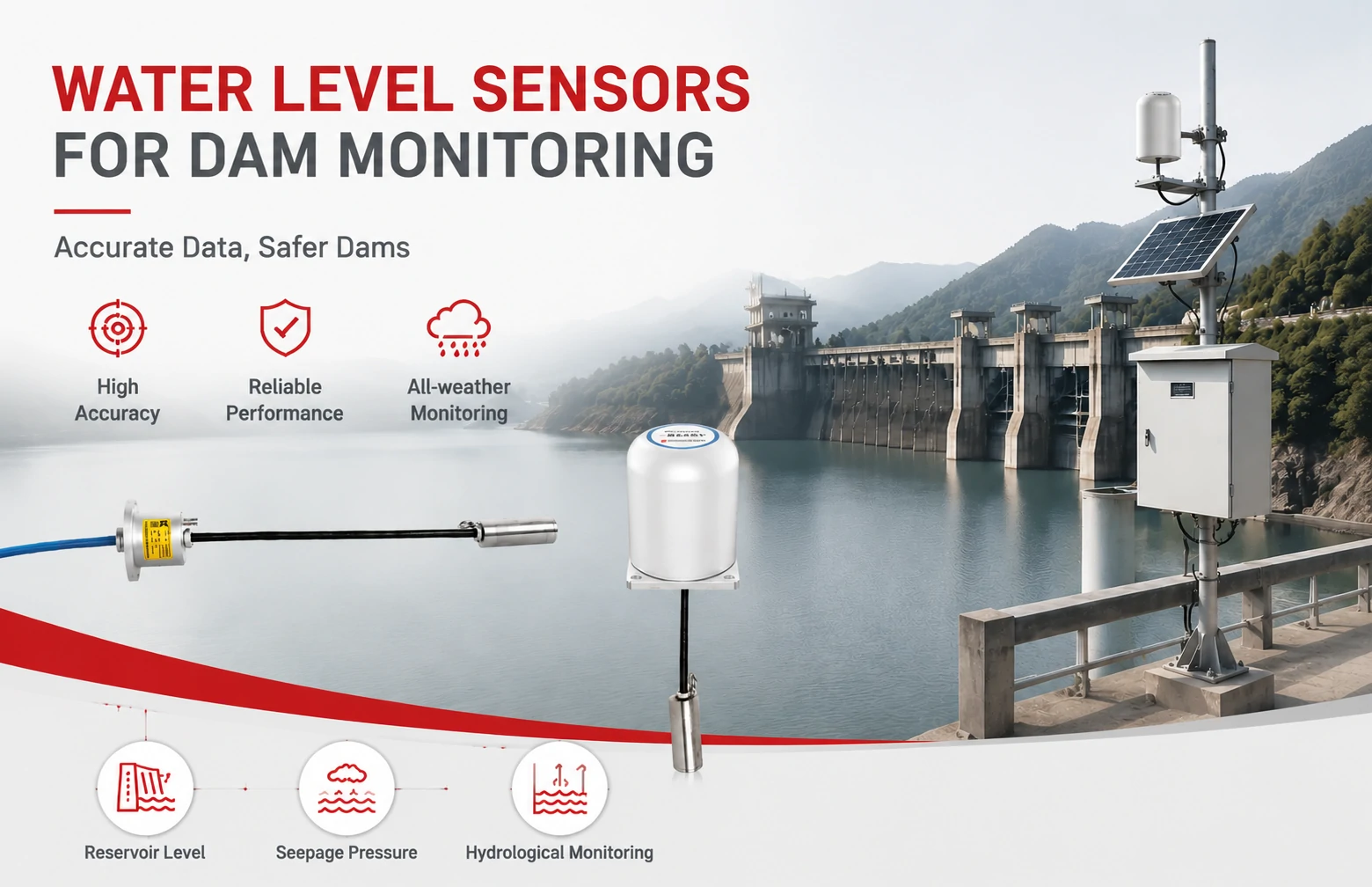
Kingmach Water Level Sensors for Dam Monitoring: A Buyer's Guide to Differential Pre...
Products
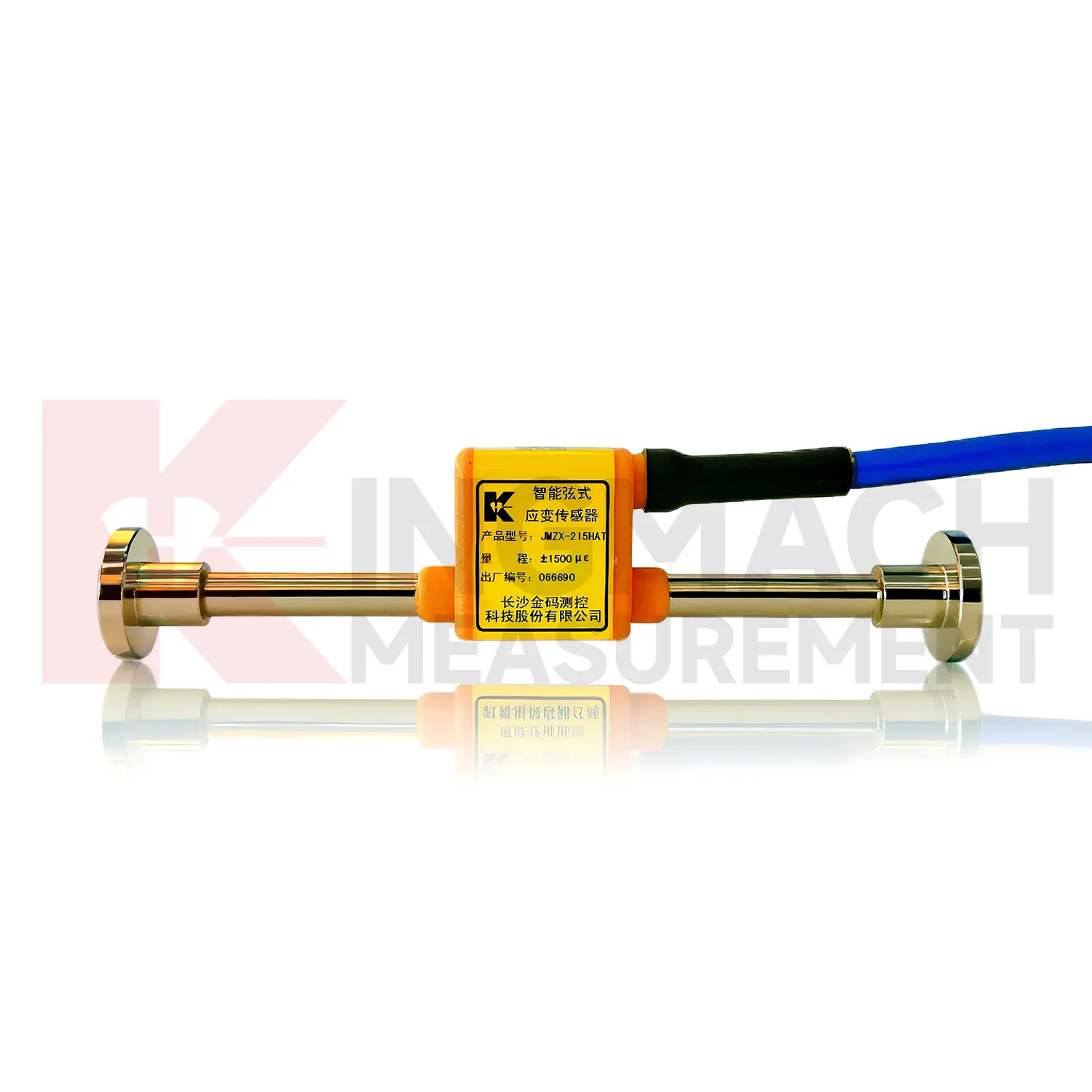
Smart vibrating wire strain gauge (embedment model) JMZX-215HA/215HAT/HB
View Details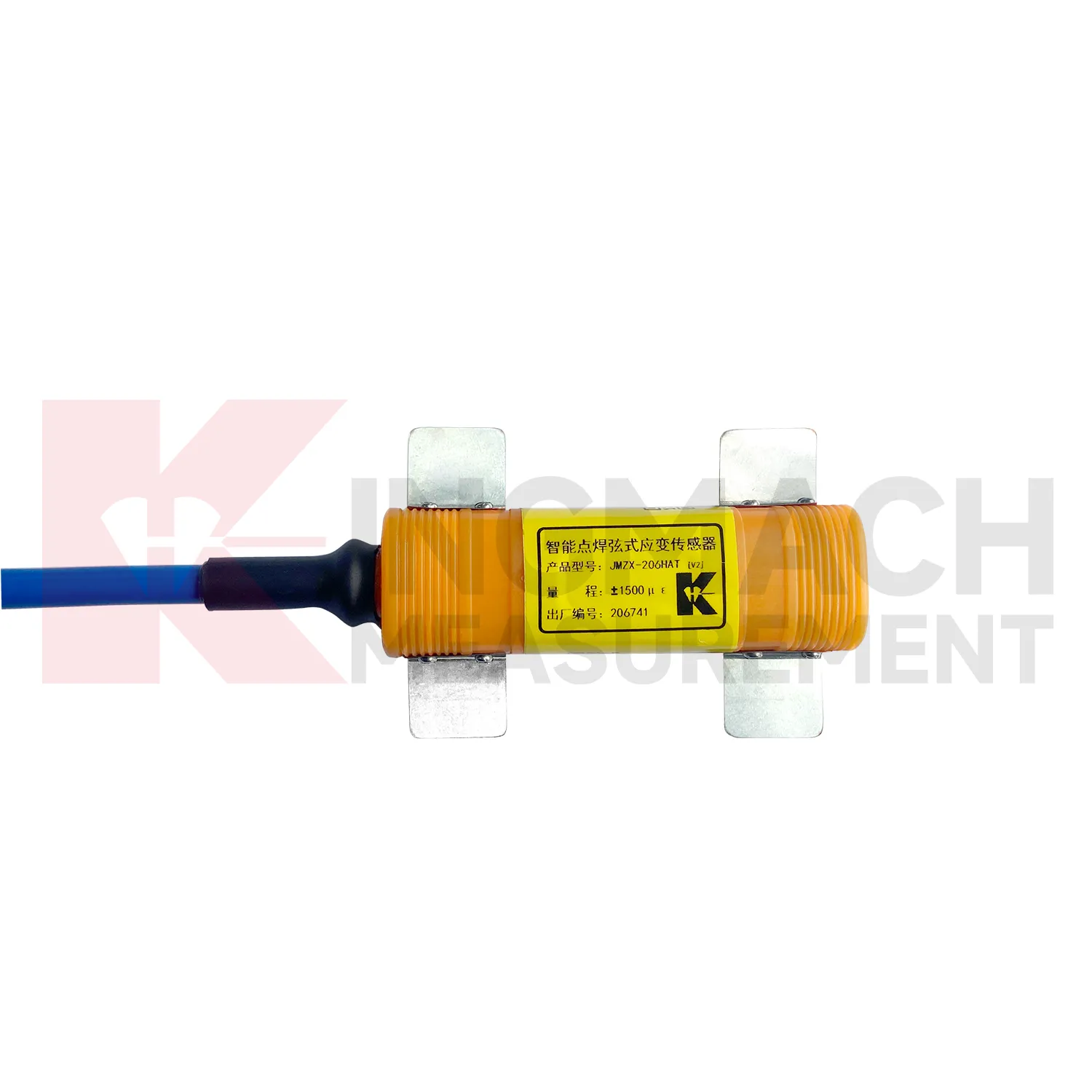
Smart vibrating wire strain gauge (surface welded model) JMZX-206HAT
View Details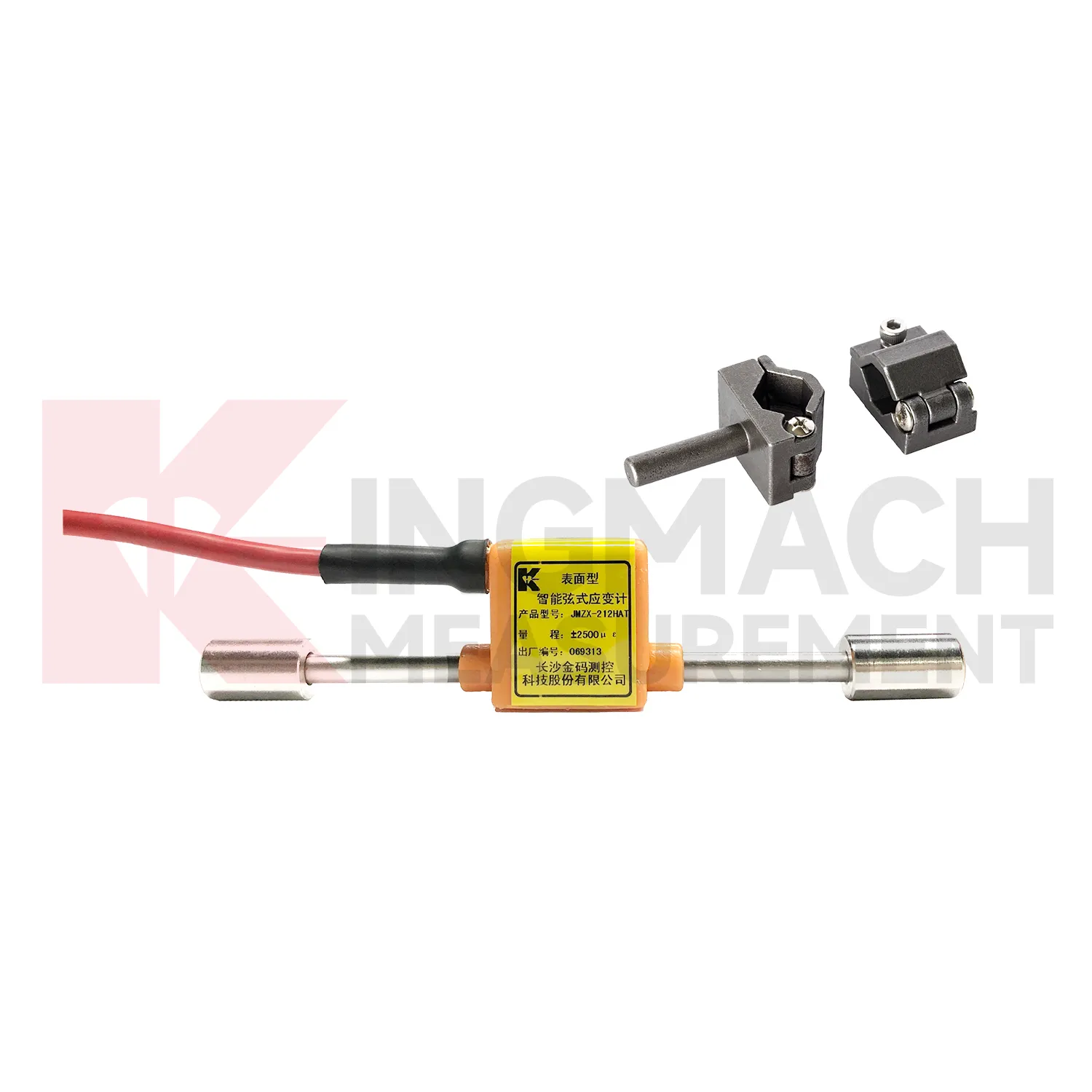
Smart vibrating wire strain gauge (surface model) JMZX-212HAT/HB
View DetailsFAQ
You’ll need to grind off the coating in the weld zone down to bright metal. The gauge blocks get welded directly to the bare steel to ensure proper strain transfer. After installation, you can recoat the area, keeping the gauge body and cable entry protected with a cover if needed. The factory can supply weatherproof covers that fit the assembly.
Foil gauges need stable excitation and are more sensitive to electromagnetic noise, especially over long cables. Vibrating wire sensors output a frequency, which travels well over distance without signal degradation, and they don’t drift as much because the wire’s resonant frequency is inherently stable. For multi-year monitoring on outdoor steel structures, that usually means cleaner data with less recalibration.
Yes. These gauges output a pulse or frequency signal. The CR1000 reads vibrating wire sensors using a dedicated interface module or by measuring frequency on a pulse channel, depending on your setup. Kingmach provides wiring diagrams and technical notes for common loggers. If you’re using a different brand, just let the support team know and they’ll help with the configuration.
Standard gauge length is usually 150 mm, which works for most structural members where the strain is fairly uniform. For areas with steep strain gradients, like near a weld detail or a crack, a shorter gauge length (say 50 mm) gives a more localized reading. If you’re not sure, send a sketch of the structure and loading to Kingmach’s application engineers—they’ll recommend a length that captures the strain you need without missing critical peaks.
Share your product type, target capacity, and application requirements. Our team can review the details and recommend a practical next step.
If you are interested in our products or want to become our partner.
Please leave your contact information, our team will contact you as soon as possible.
Mail: [email protected]
Contact Us: +8613808434127
Address: No. 188 Tongzipo West Rd, Changsha, Hunan, China